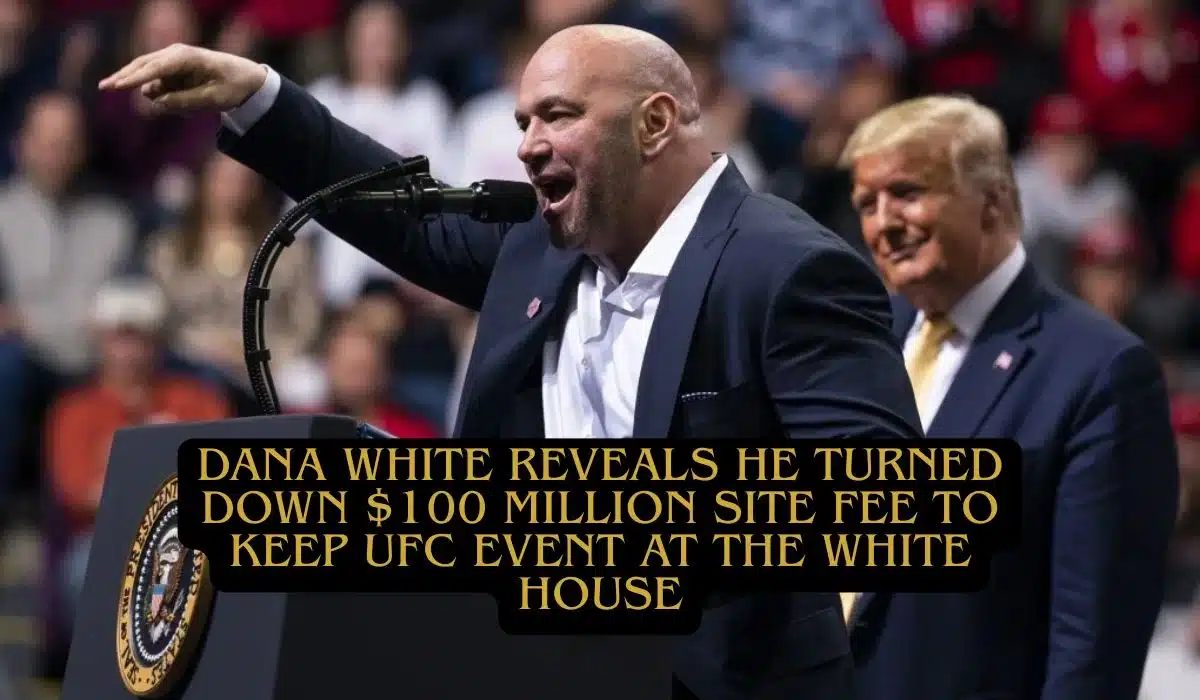
The UFC has long been known for its groundbreaking moves and “anytime, anywhere” attitude, but CEO Dana White recently revealed just how far he was willing to go to make history.
In a move that highlights the promotion’s deep ties with the current administration, White disclosed that he walked away from a staggering $100 million site fee to ensure a specific event took place at the White House.
A Massive Financial Sacrifice for UFC History
In the world of professional combat sports, site fees are often the lifeblood of major events.
Governments and private entities routinely pay tens of millions of dollars to host a UFC numbered event, citing the massive boost in tourism and global visibility.
However, when the opportunity arose to bring the Octagon to the most famous address in America, the financial bottom line took a backseat.
Dana White confirmed that despite being offered a nine-figure sum to take the event elsewhere, likely to a traditional powerhouse like Saudi Arabia or Las Vegas, the prestige of a White House setting was non-negotiable.
Why the White House Event Matters
The intersection of politics and sports has never been more visible than in the relationship between Dana White and President Donald Trump.
This event wasn’t just about fights; it was a statement of cultural influence.
By choosing the White House over a $100 million payday, the UFC solidified its status as a premier American brand.
According to reports and internal discussions, the goal was to create a “money-can’t-buy” atmosphere that resonated with the promotion’s core domestic audience while showcasing the sport’s massive growth from the “human cockfighting” era to the halls of government.
Fact-Checking the Stats: The Growth of UFC Value
To understand why White could afford to turn down such a massive sum, one only needs to look at the current trajectory of the company.
Using data tracked by Tapology, we can see the sheer volume of high-profile events the UFC maintains.
- Global Reach: The UFC now holds events in over 15 countries annually.
- Roster Depth: With over 600 active fighters, the promotion has the inventory to run multiple high-stakes cards simultaneously.
- Revenue Streams: Between the Paramount broadcast deal and massive sponsorship hooks like Bud Light and Monster Energy, the promotion is no longer solely dependent on a single site fee to turn a profit.
Dana White’s Philosophy on Business and Loyalty
This isn’t the first time Dana White has prioritized a vision over a quick check. During the 2020 pandemic, White spent millions to secure “Fight Island” in Abu Dhabi when every other sports league had shut down.
Turning down $100 million is a testament to the UFC’s current leverage. They are no longer a “distributor” of content; they are a destination.
Whether it’s the Apex in Las Vegas or the South Lawn of the White House, the UFC brand carries enough weight to dictate terms that would break other sporting organizations.
What’s Next for UFC Special Events?
With the precedent set by rejecting such a massive offer, fans are wondering what other unique venues are on the horizon.
Rumors have circulated about everything from ancient Roman amphitheaters to massive outdoor stadiums in Africa.
One thing is certain: Dana White is looking for “moments,” not just matches. If a venue offers the chance to make the front page of every newspaper in the world, the UFC is willing to pay, or in this case, lose whatever it takes to get there.
The Bottom Line
The decision to bypass a $100 million offer proves that the UFC is operating in a different stratosphere than its competitors.
It’s about legacy, political positioning, and the relentless pursuit of being first. For Dana White, some things are simply worth more than a hundred million dollars.