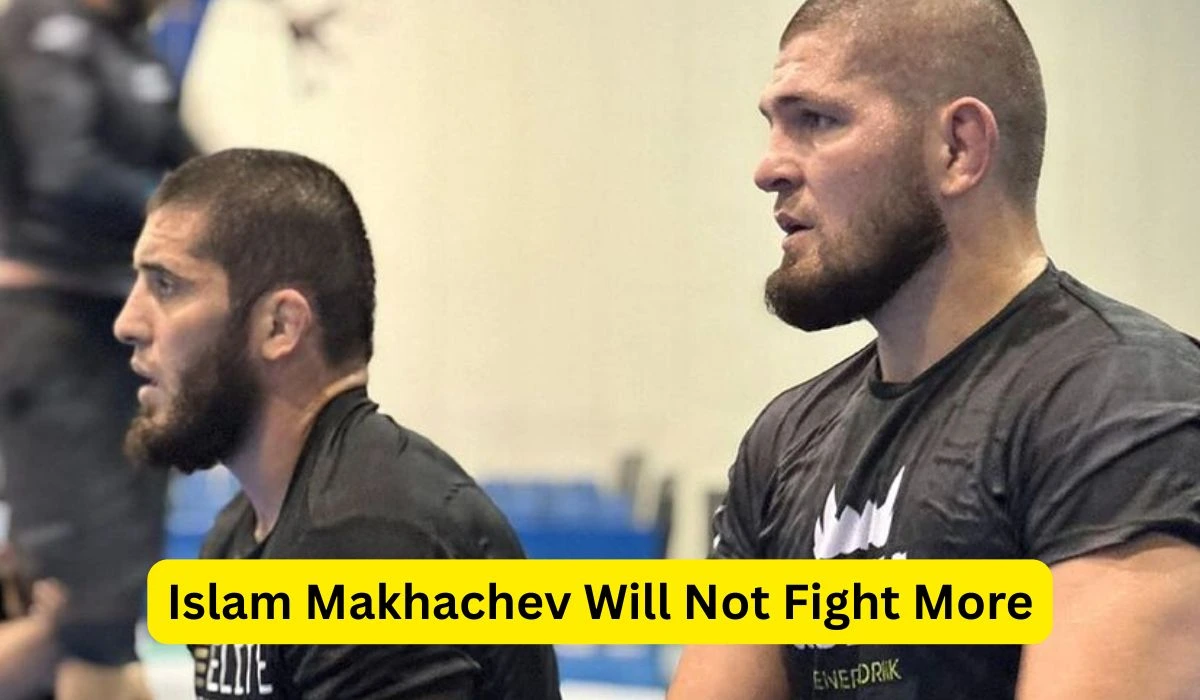
The MMA world is buzzing after Islam Makhachev added another historic achievement to his career.
By defeating Jack Della Maddalena and becoming the new welterweight champion, Islam has officially placed himself among the rare names who became two-division UFC champions.
This victory established him as one of the greatest active fighters in the sport today.
But while fans expected Islam Makhachev to now defend his welterweight and lightweight legacies actively, a surprising comment from Khabib Nurmagomedov has shifted the entire conversation.
According to Khabib, Islam “will not fight more” and will only compete occasionally rather than regularly.
This statement has raised questions worldwide. Why would a fighter who is at the peak of his career slow down now? Why would a two-division champion, who still looks dominant, limit his appearances?
To understand this, we must look at Islam’s age, his fighting style, the expectations of his team, and the philosophy shared by Khabib and his late father Abdulmanap Nurmagomedov.
Islam Makhachev’s Legacy Is Already Secure
Before unpacking why he won’t fight more, it’s important to look at what Islam has already achieved.
Islam Makhachev has done something extremely rare in MMA. Becoming champion in two divisions takes years of work, careful planning, and elite skill.
Not many fighters in UFC history have managed to win titles in both lightweight and welterweight divisions. The fact that Islam did this while beating top contenders shows how complete his game is.
His victory over Jack Della Maddalena proved he can compete with bigger, stronger fighters without losing the technical sharpness he developed in the lightweight division.
So even before discussing retirement or reduced activity, one thing is clear: Islam’s career is already legendary.
Khabib’s Surprising Statement: “Islam Will Not Fight More”
During a recent interview, Khabib Nurmagomedov spoke about the future of his longtime teammate and friend Islam Makhachev.
Khabib explained that Islam will not be as active as most champions. Instead, he will fight less often and focus only on major fights.
This comment shocked fans who assumed Islam would continue a traditional champion schedule of two or more fights per year.
But Khabib’s reasoning is very simple:
Islam is 34 years old, and at this age, fighters need to be smarter about their career choices.
Khabib has always been protective of Islam. They grew up together, trained under the same coach, and share the same fighting culture. So when Khabib speaks about Islam’s future, it’s not for headlines, it’s genuine concern.
Age Is the Main Factor Behind the Slowdown
Islam Makhachev may still look incredibly sharp, but age affects every fighter, no matter how talented.
At 34 years old, fighters start experiencing changes in:
- reflexes
- recovery time
- speed
- durability
- ability to handle training camps
This does NOT mean Islam is slowing down right now. He’s still highly dangerous, skilled, and dominant. But Khabib and his team think long-term. They have seen what happens when great fighters stay active too long.
Even the best athletes in the world see a decline in their late 30s. By controlling the number of fights, Islam can maintain his level rather than risk a sudden drop in performance.
Khabib Wants Islam to Retire at His Peak
Khabib Nurmagomedov famously retired at the top of the sport. He was undefeated, undisputed champion, and considered the best lightweight ever. He walked away with his health, legacy, and dignity intact.
Khabib wants the same for Islam. He doesn’t want Islam to experience unnecessary wars or long-term damage.
During the interview, Khabib hinted at this idea clearly: Islam should take only big fights, championship fights, legacy fights, or fights that make sense financially and historically.
This means no unnecessary title defenses, no constant fight pressure, and no need to stay active every few months.
Islam will fight strategically, not frequently.
Fighting Less Is Now Common Among Elite Champions
Some of the biggest names in the UFC today fight only once or twice a year. This shift is becoming more normal because fighters understand the importance of longevity.
Examples from recent years show that champions who fight less often extend their careers and stay fresh mentally and physically.
For Islam, this is especially important because he fights with a very intense style involving grappling, pressure, and high energy.
His training camps are extremely demanding. Fighting too often could lead to burnout or injuries.
Khabib wants to avoid that completely.
Islam’s Body Has Already Been Through Years of Heavy Training
Islam has been training in combat sports since childhood. Dagestani fighters train harder and more frequently than most athletes worldwide.
Years of wrestling, grappling, striking, conditioning, and weight cutting take a toll.
Even if Islam looks fresh today, his body has a long history of wear and tear. Training at this level for decades means the body must be treated with more care.
So reducing fight activity is not a sign of weakness. It’s a sign of intelligent career management.
Being a Two-Division Champion Changes Everything
Once a fighter becomes a double champion, their value skyrockets. They no longer need to take every fight offered. They can pick the biggest matchups high reward, high popularity, and legacy impact.
Islam now has:
- more negotiating power
- more financial security
- more respect from the UFC
- more freedom to choose opponents
This makes frequent fighting unnecessary. Instead, each fight can be a major event, creating bigger hype and bigger paydays.
Khabib’s Influence Is Stronger Than Ever
Khabib has always been a guiding figure in Islam’s life. Whether in training, career decisions, or mental preparation, Islam trusts Khabib completely.
Khabib saw firsthand how fighters decline when they stay too long. He saw legends retire late and face unnecessary losses. So he doesn’t want Islam to repeat that pattern.
If Khabib suggests Islam should reduce activity, Islam will follow that advice. Their bond is stronger than normal friendships. It’s based on trust, discipline, and the philosophy taught by Khabib’s father.
In Dagestan, mentorship is taken seriously. So Khabib’s words carry great meaning.
Islam Will Now Focus on Big Fights Only
Fans should expect Islam Makhachev to fight only 1–2 times per year from now on. These fights will likely be:
- title defenses
- super fights
- legacy fights
- high-profile matchups
He will not take risky short-notice fights or unnecessary contenders. Every fight he accepts will have major importance.
Islam’s Motivation Is Starting to Change
Another reason Islam will not fight more is his shifting priorities. Like many champions nearing their mid-30s, Islam is starting to focus more on:
- family
- health
- long-term goals
- coaching and mentoring younger fighters
Islam has already accomplished everything a fighter could dream of. Staying active constantly no longer brings major benefits.
Instead, fighting occasionally keeps him motivated and allows him to enjoy life outside the cage.
Islam’s Fighting Style Requires More Time Between Fights
Some fighters can fight regularly because their style doesn’t cause much damage. But Islam’s style is physically demanding.
His grappling-heavy approach requires enormous conditioning and constant drilling.
Training camps take a lot out of him, and recovery becomes harder with age.
By spacing out his fights, Islam can maintain top performance without risking injury.
Khabib’s Retirement Philosophy Is Becoming the Dagestani Standard
Khabib changed the way fighters think about retirement. Instead of fighting until decline, he proved that retiring early is not weakness, it’s smart.
This philosophy is becoming common among Dagestani fighters:
- retire at peak
- avoid unnecessary damage
- leave as a champion
- protect your health
Islam is expected to follow the same idea. Becoming a two-division champion already secures his future. Retiring with both belts or after a few more big fights would complete his legacy.
Fewer Fights Means Higher Quality Fights
One benefit of Islam fighting less is that each fight becomes a major event. Fans appreciate quality over quantity, especially when dealing with a champion of this level.
When Islam fights once or twice a year, hype grows naturally. The UFC can build bigger cards around him, and fans get top-level performances every time.
The MMA World Should Appreciate Islam While He’s Active
Since Islam will not fight more in the coming years, fans should enjoy the fights he does choose to take. Champions like him appear rarely. His run at lightweight and welterweight is already historic.
If he continues to follow Khabib’s guidance, Islam may retire earlier than many expect. That means the window to witness his greatness is limited.
Final Thoughts: Islam Makhachev’s Future Is About Smart Decisions, Not Quantity
Islam Makhachev is not slowing down because he is struggling. He is slowing down because he is smart, experienced, and guided by one of the greatest fighters ever.
His age, his achievements, and Khabib’s influence all point in the same direction:
Islam will fight less, but every fight will matter.
He has already earned his place in UFC history. Now his goal is to protect that legacy and retire at the top just like Khabib.
Fans should expect fewer fights, but bigger moments. And when Islam finally decides to retire, he will leave the sport as one of the most successful fighters of his generation.