Former UFC women’s bantamweight champion Ronda Rousey recently sparked debate with strong remarks about how mixed martial arts fighters are remembered after they leave the sport.
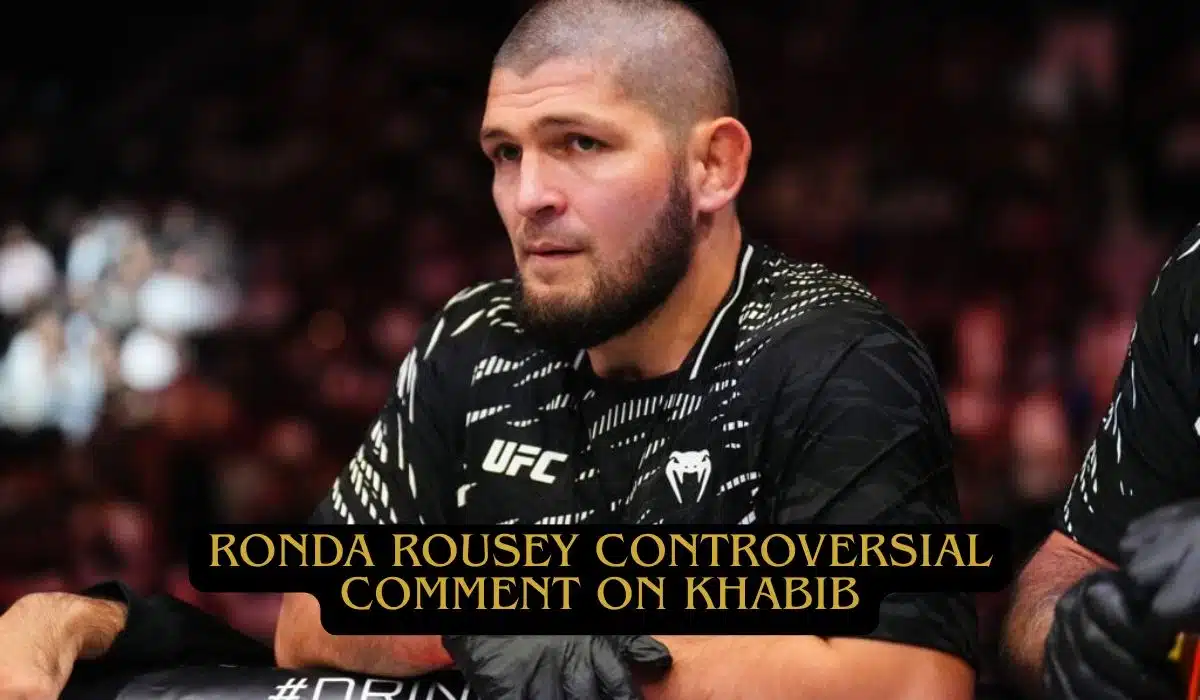
In a candid chat on the Bertcast podcast, Rousey suggested that undefeated former lightweight ruler Khabib Nurmagomedov still enjoys superstar status largely because he walked away before experiencing a significant decline.
Rousey’s comments have raised eyebrows across the MMA world, as she tackled the topic of legacy, fan perception, and respect for champions.
Her view challenges the common narrative around Nurmagomedov and highlights broader issues she sees in the way fans and media treat fighters once they step away from competition.
Rousey’s Take: Respect Tied to Timing
Rousey argued that MMA fans tend to praise fighters who retire undefeated or while they’re still at the top, but turn on them quickly if they later lose.
According to her, that pattern explains why Nurmagomedov, who retired with a perfect 29-0 record, is still held in such high regard, while others lose fan support after career setbacks.
“I think the only reason MMA fans venerate Khabib is because he stopped before he showed any real limits,” Rousey said in the interview. “If he kept fighting until he reached his limit, people would be dismissing him just like they do with other fighters.”
She pointed out that this pattern isn’t unique to Nurmagomedov. Champions like Brock Lesnar, Chuck Liddell, Anderson Silva, and Fedor Emelianenko all saw adoration fade once their aura of invincibility cracked.
Rousey said this quickly shifting support makes fighters overly cautious about how they leave the sport.
Comparing MMA and Professional Wrestling
Rousey also drew a contrast between MMA and professional wrestling. In wrestling promotions like WWE, she noted, retired stars are often celebrated and held in high esteem long after they’re finished competing. Wrestlers such as The Undertaker and Shawn Michaels remain fan favorites despite no longer wrestling.
She suggested that because MMA doesn’t have a scripted storyline or ceremonial passing of the torch, fans abandon fighters once they start losing.
This, she argues, pressures fighters to retire early so their careers end on a high note, and they keep their reputations intact.
Rousey’s Own Career Reflections
Rousey didn’t just analyze others; she drew from her own experience. After dominating the UFC and becoming the first female inductee into the UFC Hall of Fame, Rousey’s career declined with back-to-back knockout losses to Holly Holm and Amanda Nunes.
Those defeats drastically changed how fans talked about her, something she still reflects on.
Rousey admitted that part of her desire to retire undefeated came from a fear of losing the legacy she had built.
She explained that leaving before defeat would help secure her place in MMA history. But after transitioning to WWE, she noticed that in wrestling, stars are still celebrated even when their final chapter doesn’t end with a win.
Backlash and MMA Community Reactions
Unsurprisingly, Rousey’s comments didn’t go unchallenged. Ali Abdelaziz, long-time manager of Nurmagomedov, dismissed her remarks as driven by jealousy, pointing out that Khabib’s perfect record and status as an undisputed champion speak for themselves.
He also noted that Rousey’s own career ended with losses, which, in his view, weakens her position in this discussion.
Critics argue that comparing MMA to wrestling is unfair, given the fundamental differences between the sports. MMA has real stakes, lives on unpredictability, and lacks the narrative structure that allows wrestling stars to remain beloved icons despite losses or retirement.
Still, Rousey’s comments have prompted fresh conversation about how fighters’ legacies should be viewed once their competitive days are over.
What This Means for MMA Legends
Rousey’s remarks have ignited discussion not just about Nurmagomedov’s career, but also about how the MMA community engages with its heroes.
Her view suggests that the sport’s win-or-lose culture may discourage future legends from staying active later into their careers—simply to avoid losing fan affection.
As MMA continues to grow in global popularity, this debate highlights a deeper question: Should fighters be celebrated for their entire body of work, rather than just for remaining undefeated?
Whether fans agree or disagree with Rousey, her words have opened a window into how the nature of mixed martial arts fandom itself might be evolving.