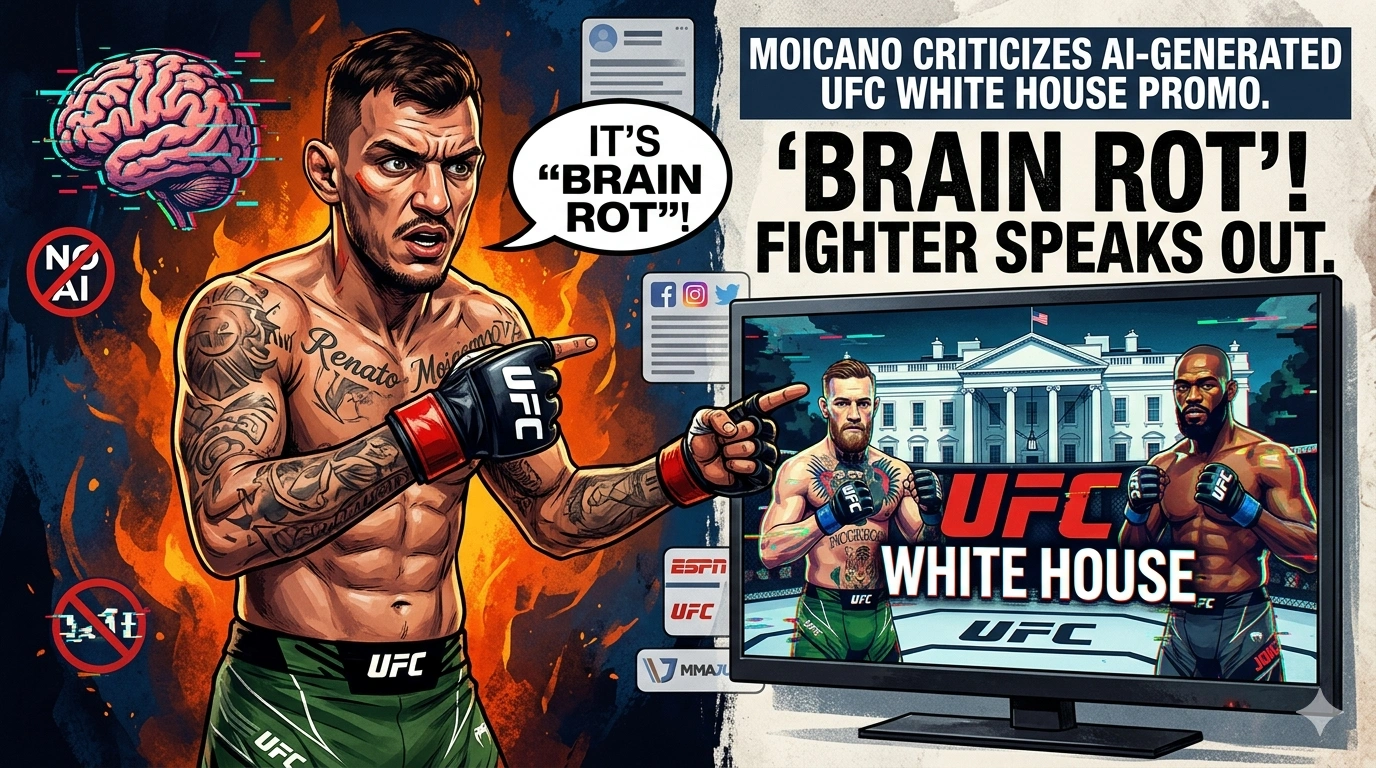
Brazilian lightweight contender Renato Moicano has stirred conversation across the MMA community after openly criticizing a recent AI-generated promotional clip tied to a rumored Ultimate Fighting Championship (UFC) event at the White House.
His blunt reaction has once again highlighted growing concerns among fighters about the use of artificial intelligence in sports promotion.
What Sparked the Controversy?
The issue began when an AI-created video started circulating online, teasing a hypothetical UFC event hosted at the White House.
The clip, designed to generate hype, quickly gained traction on social media platforms. However, instead of excitement, it drew criticism from several corners—including Moicano.
Moicano didn’t hold back when sharing his opinion. He described the AI-generated content as “brain rot,” clearly frustrated by what he sees as low-quality, misleading promotional tactics.
According to him, such content does more harm than good, especially when it confuses fans or spreads unrealistic expectations.
Moicano’s Take on AI in MMA Promotion
Moicano has built a reputation not only as a skilled fighter but also as someone who speaks his mind. In this case, his concern revolves around authenticity.
He believes that promotional material should reflect real fights, real athletes, and real events—not artificially generated scenarios.
The Brazilian fighter pointed out that AI content, when not clearly labeled or used responsibly, can blur the line between reality and fiction.
This becomes particularly problematic in a sport like MMA, where credibility and trust are crucial for both fighters and fans.
He also hinted that such promotions could undermine fighters who work hard to build their brand. Instead of focusing on actual matchups and rankings, attention shifts toward viral but unrealistic content.
The Growing Role of AI in Combat Sports
Artificial intelligence is increasingly being used across industries, and sports promotion is no exception. From automated highlight reels to predictive analytics, AI has found multiple applications in MMA.
However, the controversy surrounding this White House-themed UFC promo shows that not everyone is on board. While AI can enhance creativity, it can also create confusion if used irresponsibly.
Moicano’s reaction reflects a broader sentiment among athletes who feel that human storytelling should remain at the center of sports promotion.
Fighters train for years to earn recognition, and many believe that AI-generated hype can overshadow genuine achievements.
Fan Reactions: Mixed but Engaged
The MMA community has been divided on the issue. Some fans found the AI-generated promo entertaining and harmless, viewing it as just another piece of digital content meant to spark imagination.
Others sided with Moicano, arguing that such videos can mislead audiences, especially casual viewers who might mistake them for official announcements.
In an era where misinformation spreads quickly, even promotional content needs to be handled carefully.
The debate has also raised questions about how organizations like the UFC should approach emerging technologies. Should AI be embraced fully, or should there be clear boundaries?
UFC and the Importance of Authentic Branding
The UFC has built its global brand on real competition, compelling narratives, and larger-than-life personalities.
Fighters like Conor McGregor and Israel Adesanya became stars not because of artificial hype, but due to their performances and personalities.
Moicano’s criticism suggests that leaning too heavily on AI-generated content could dilute that authenticity.
While the promotion has not officially commented on this specific video, the discussion itself highlights the need for a balanced approach.
Why This Matters for the Future of MMA
This incident is more than just a social media moment—it points to a larger shift in how sports content is created and consumed.
As AI tools become more accessible, the line between real and generated content will continue to blur.
For fighters, this raises concerns about representation and control over their image. For fans, it creates challenges in distinguishing between official promotions and unofficial creations.
Moicano’s outspoken stance serves as a reminder that while technology can enhance storytelling, it should not replace the authenticity that makes sports compelling.
Final Thoughts
Renato Moicano’s criticism of the AI-generated UFC White House promo has sparked an important conversation about the role of artificial intelligence in MMA.
His “brain rot” comment may sound harsh, but it reflects genuine concerns about quality, authenticity, and trust.
As the UFC and other sports organizations continue to explore new technologies, finding the right balance will be key. AI can be a powerful tool, but as this controversy shows, it needs to be used carefully.
For now, Moicano has made one thing clear—fighters want their stories told in a real and meaningful way, not generated by algorithms.